Critical Role is a popular show where a group of voice actors play tabletop role-playing games (TTRPGs). They primarily play Dungeons & Dragons (D&D), a game where players create characters, explore imaginary worlds, and tell stories together.
Critical Role is a popular show where a group of voice actors play tabletop role-playing games (TTRPGs). They primarily play Dungeons & Dragons (D&D), a game where players create characters, explore imaginary worlds, and tell stories together. If you’ve discovered Critical Role and want to start playing, this guide will explain exactly what they play, what to watch, and what to buy to get started.
What Game Does Critical Role Play?
Critical Role primarily plays Dungeons & Dragons (D&D), specifically D&D (5e) of the game (with 2024 revised rules). D&D is a tabletop RPG where players take on the roles of characters in a fantasy world. One player acts as the Dungeon Master (DM), who describes the world, controls non-player characters (NPCs), and guides the story. The other players create characters with unique abilities and personalities, and together, they embark on adventures.
D&D (with 2024 revised rules) is the current edition of the game and is designed to be accessible to new players. It uses a set of rules to determine how characters interact with the world, fight enemies, and solve problems. For example, rolling a 20-sided die (d20) is a key mechanic for resolving actions like attacking, persuading someone, or climbing a wall. The rules provide structure, but the focus is on creativity and storytelling.
Critical Role also occasionally plays other TTRPGs, like Call of Cthulhu or Monsterhearts, but D&D is their main game. If you’re inspired by Critical Role, D&D is the best place to start. It’s widely available, has a large community, and offers plenty of resources for beginners.
Which Campaign Should You Start Watching?
Critical Role has multiple campaigns, each with its own story and characters. For beginners, starting with the right campaign can make it easier to get into the show.
Campaign 1: This is where Critical Role began, but it’s not the easiest starting point for new viewers. The group had already been playing together for years before streaming, so the story is already in progress. Additionally, the production quality is lower in the early episodes. However, if you enjoy classic fantasy tropes and a more traditional D&D experience, Campaign 1 is worth watching later.
Campaign 2: Many viewers recommend Campaign 2 as a starting point. It begins with the players creating new characters and starting fresh, so you can follow the story from the beginning. The characters are memorable, the story is engaging, and the production quality is much higher than Campaign 1. It’s a great introduction to how D&D works and how Critical Role tells stories.
Campaign 3: This is the most recent campaign and is still ongoing. It’s a good starting point if you want to watch new episodes as they come out and be part of the current conversation. However, because it’s still unfolding, you’ll have to wait for new episodes, which might be frustrating if you want to binge-watch.
If you’re unsure where to start, Campaign 2 is often suggested. It’s complete, has high production quality, and introduces you to D&D and Critical Role in a beginner-friendly way.
What to Buy to Play Like Critical Role
The minimum — D&D Starter Set
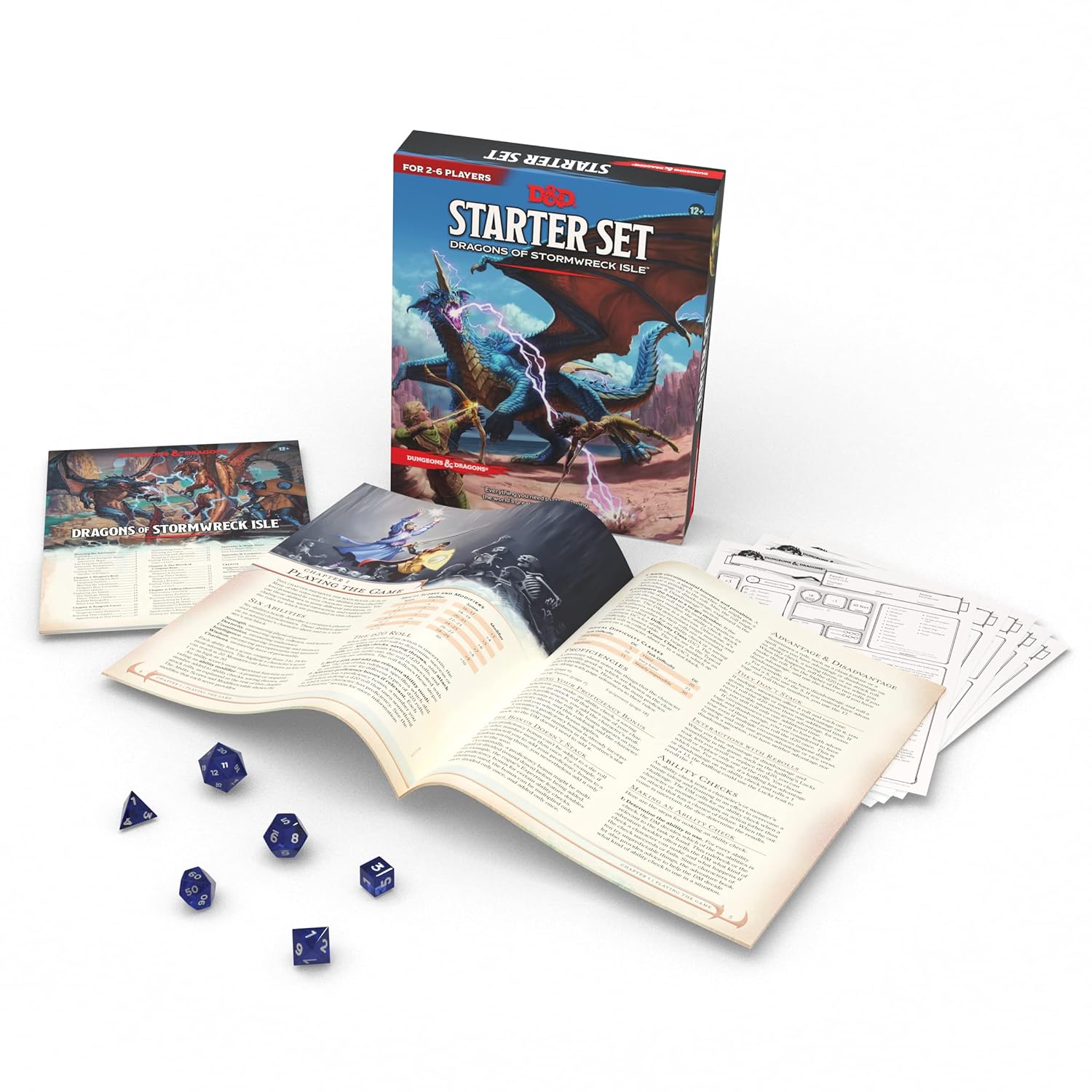
If you’re new to D&D and want to start playing quickly, the D&D Starter Set (or current equivalent beginner product) is the best option. It includes everything you need to begin: a rulebook, pre-made characters, dice, and an adventure called The Lost Mine of Phandelver. This adventure is designed for beginners and guides the Dungeon Master through running the game.
The Starter Set is affordable and easy to use. It explains the basics of D&D, like how to roll dice, how combat works, and how to roleplay. The pre-made characters are ready to play, so you don’t need to worry about creating your own right away. This is a great way to try D&D without committing to buying a lot of books.
One thing to note is that the Starter Set doesn’t include everything. For example, it only has rules for the characters included, so if you want to create your own character, you’ll need the Player’s Handbook. However, for beginners, the Starter Set is a perfect introduction.
The full setup — Core rulebooks + adventure
If you’re ready to dive deeper into D&D, the Player’s Handbook (PHB) is essential. It contains all the rules for creating and playing characters, including races, classes, spells, and equipment. It’s the core rulebook for D&D and is used by players in every game. The Dungeon Master’s Guide and Monster Manual are also needed for the DM.
In addition to the core books, you’ll need an adventure to play. Critical Role has its own official adventure called Critical Role: Call of the Netherdeep. This adventure is set in the world of Exandria, the same world where the Critical Role campaigns take place. It’s designed for characters levels 3–12 and includes a mix of exploration, combat, and roleplaying. It’s a great choice for fans of Critical Role who want to experience a similar style of storytelling.
Here’s what you’ll need for the full setup:
- Player’s Handbook: The core rulebook for D&D.
- Dungeon Master’s Guide and Monster Manual: Required for the DM.
- Critical Role: Call of the Netherdeep: An adventure set in the world of Exandria.
- Dice: A set of polyhedral dice (d4, d6, d8, d10, d12, d20).
- Character Sheets: You can download these for free online or create your own.
This setup gives you everything you need to play D&D like Critical Role. It’s more expensive than the Starter Set, but it offers more flexibility and depth. If you’re serious about playing D&D, this is the way to go.
After Critical Role — Other Shows in the Same Style
If you enjoy Critical Role and want to watch more TTRPG shows, there are plenty of others to explore. Each show has its own style, so you can find one that matches your interests.
Dimension 20: This show combines D&D with comedy and unique storytelling. Each season has a different theme, like a high school murder mystery or a fantasy heist. The episodes are shorter than Critical Role, making it easier to binge-watch. It’s a great choice if you enjoy humor and creative twists on D&D.
The Adventure Zone: This podcast follows three brothers and their father as they play D&D and other TTRPGs. The early episodes are hilarious and chaotic, with a focus on storytelling and character development. It’s a good option if you prefer audio-only content or want something more lighthearted.
Acquisitions Incorporated: This show features Penny Arcade’s creators playing D&D with Chris Perkins, one of the game’s lead designers. It has a mix of comedy, action, and memorable characters. The episodes are shorter than Critical Role, and the DM provides helpful explanations for new players.
Not Another D&D Podcast (NADDPOD): This podcast combines humor, storytelling, and memorable characters. The DM and players are all experienced improvisers, so the episodes are fast-paced and entertaining. It’s a great choice if you enjoy comedy and want a different take on D&D.
These shows offer a variety of styles and formats, so you can find one that suits your preferences. Watching different groups play can also give you ideas for your own D&D games.
Frequently Asked Questions
Q: Can I play D&D without watching Critical Role?
Yes, absolutely! Critical Role is just one way to experience D&D. The game can be played in many styles, from serious storytelling to casual fun. You don’t need to watch the show to enjoy or understand the game.
Q: How long does it take to learn D&D?
Learning the basics of D&D can take just a few hours, especially with beginner sets like the D&D Starter Set. Mastering all the rules might take longer, but the game is designed to be flexible, so you can learn as you play.
Q: Is Critical Role’s style of play typical for D&D?
Not necessarily. Critical Role focuses heavily on roleplaying and storytelling, which is one way to play. Many groups focus more on combat, exploration, or a mix of all three. Your D&D experience can be as unique as your group!