Planescape: D&D's Strangest Setting
Planescape is a Dungeons & Dragons setting that takes players beyond the typical fantasy world and into the multiverse. Instead of exploring forests, dungeons, or castles, you’ll travel to strange, otherworldly dimensions called planes.
Planescape is a Dungeons & Dragons setting that takes players beyond the typical fantasy world and into the multiverse. Instead of exploring forests, dungeons, or castles, you’ll travel to strange, otherworldly dimensions called planes. These planes are infinite in variety, ranging from heavenly realms of pure good to nightmarish pits of evil, and everything in between. Planescape is known for its philosophical themes, bizarre locations, and focus on ideas rather than traditional combat. It’s a setting where the power of belief shapes reality, and where characters often grapple with moral and existential questions.
What Planescape Is About
Planescape is all about exploring the multiverse—a vast collection of interconnected planes of existence. Each plane is a unique world with its own rules, inhabitants, and atmosphere. For example, the Nine Hells is a plane of fire and torment ruled by devils, while Elysium is a peaceful, idyllic paradise filled with benevolent spirits. These planes aren’t just places to visit; they’re embodiments of concepts like law, chaos, good, and evil. The setting encourages players to think about big ideas and how their characters fit into the grand scheme of the multiverse.
The central hub of Planescape is Sigil, the City of Doors. Sigil is a sprawling, chaotic city filled with portals to every plane imaginable. It’s a place where angels, demons, mortals, and other beings coexist—though not always peacefully. Sigil is ruled by the mysterious Lady of Pain, a god-like figure who enforces her will with terrifying precision. The city is a melting pot of cultures, philosophies, and factions, each with its own agenda. Factions play a major role in Planescape; they’re groups of like-minded individuals who share a common belief about how the multiverse works. For example, the Harmonium believes in absolute order, while the Anarchists seek to tear down all systems of control.
Planescape adventures often revolve around exploring strange locations, solving philosophical dilemmas, and navigating the complex politics of Sigil’s factions. Combat is less of a focus here compared to other D&D settings. Instead, players might find themselves debating the nature of reality, brokering peace between warring factions, or uncovering the secrets of a forgotten plane. The setting’s tone is often surreal and thought-provoking, with a heavy emphasis on storytelling and roleplaying.
What to Buy First
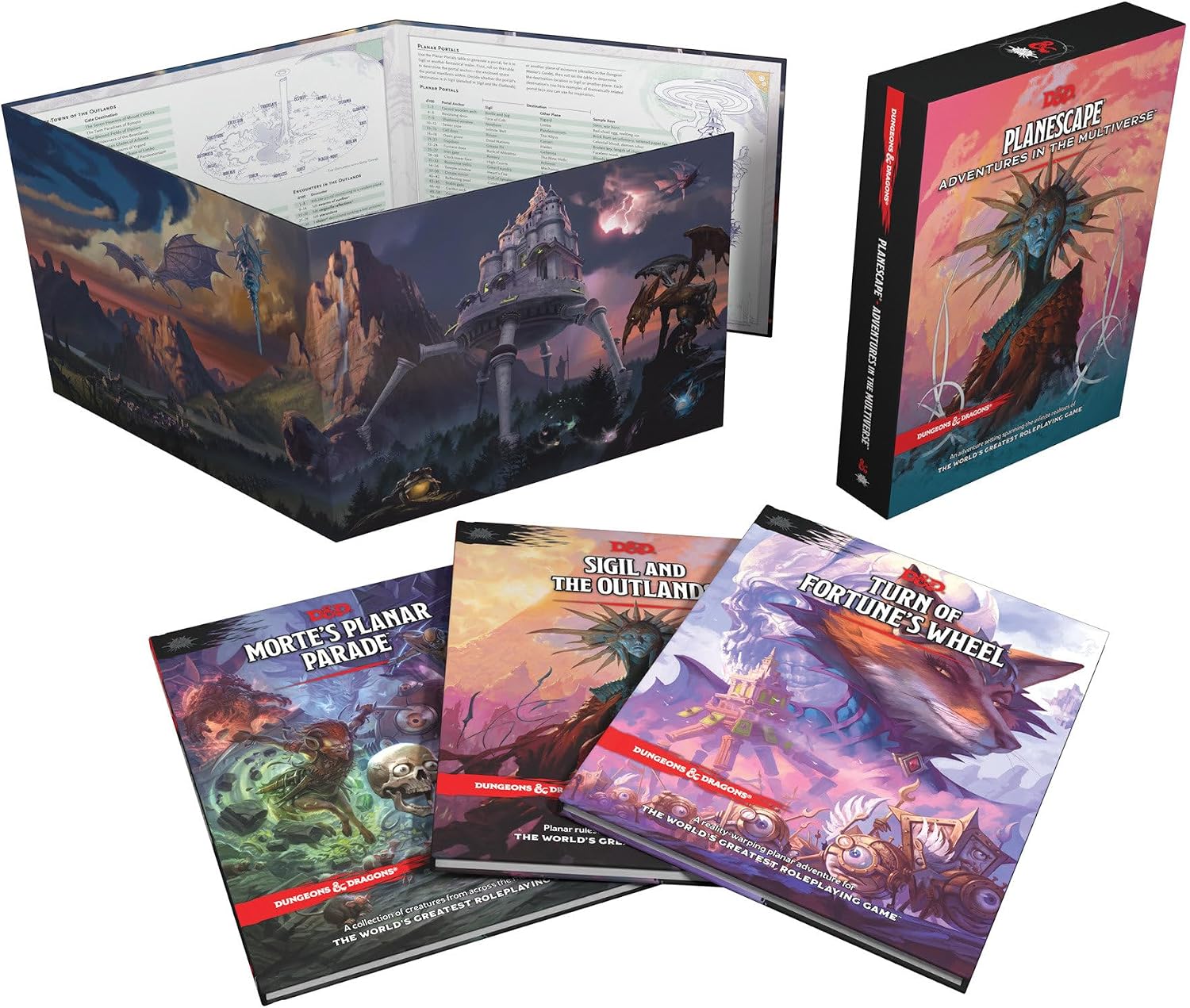
If you’re new to Planescape, the best place to start is the Planescape: Adventures in the Multiverse box set. This product is designed as an introduction to the setting and includes everything you need to run a Planescape campaign. The box set contains three books: Sigil and the Outlands, Turn of Fortune’s Wheel, and Morte’s Planar Parade. Each book serves a specific purpose and together they provide a comprehensive overview of the setting.
Sigil and the Outlands is a guidebook that focuses on Sigil, the City of Doors, and the Outlands, the plane that surrounds it. This book is packed with information about the city’s layout, factions, and key locations, as well as details about the Outlands and its gate towns—settlements built around portals to other planes. It’s an essential resource for understanding the heart of the Planescape setting.
Turn of Fortune’s Wheel is an adventure module designed for characters of levels 3–10. It’s a great starting point for beginners because it introduces players to the multiverse in an accessible way. The adventure involves exploring Sigil, traveling to different planes, and unraveling a mystery that spans the multiverse. It’s designed to showcase the weird and wonderful aspects of Planescape while providing a structured story for new players and Dungeon Masters to follow.
Morte’s Planar Parade is a bestiary filled with unique creatures that inhabit the planes. It includes everything from familiar D&D monsters to bizarre beings that are exclusive to Planescape. This book is useful for Dungeon Masters who want to populate their adventures with creatures that fit the setting’s tone and themes.
The box set also includes a poster map of Sigil and a DM screen with handy reference information. While it’s not the cheapest product, it’s the most beginner-friendly option and provides excellent value for its content. You can find it here: Planescape: Adventures in the Multiverse.
Is Planescape Right for Beginners?
Planescape can be challenging for beginners, but it’s not impossible to start with. The setting’s focus on philosophy, complex factions, and surreal locations can be overwhelming if you’re new to tabletop RPGs. Combat takes a backseat to storytelling and roleplaying, which might not appeal to players who prefer a more action-oriented game. Additionally, the multiverse’s infinite possibilities can be daunting for Dungeon Masters who are still learning how to run a campaign.
That said, Planescape offers a unique experience that can be very rewarding for beginners who are willing to dive in. The Turn of Fortune’s Wheel adventure included in the Adventures in the Multiverse box set is specifically designed to introduce new players to the setting. It provides a structured story that guides players through Sigil and the planes, making it easier to grasp the setting’s complexities. The box set also includes plenty of resources to help Dungeon Masters run the game, such as maps, NPC descriptions, and faction guides.
If you’re a beginner who enjoys storytelling, exploring strange worlds, and thinking about big ideas, Planescape could be a great fit. However, if you’re looking for a more straightforward fantasy adventure, you might want to start with a simpler setting like the Forgotten Realms or Dragonlance.
Who Planescape Is Really For
Planescape is ideal for players who enjoy deep storytelling, philosophical themes, and unconventional settings. It’s a setting that rewards creativity and curiosity, making it a great choice for players who love to roleplay and immerse themselves in their characters. If you’re someone who enjoys debating ideas, exploring strange worlds, and tackling moral dilemmas, Planescape will likely appeal to you.
The setting is also a good fit for Dungeon Masters who enjoy world-building and crafting complex narratives. Planescape’s infinite planes and factions provide endless opportunities for storytelling, and the setting encourages DMs to think outside the box. However, running a Planescape campaign requires a lot of preparation and creativity, so it’s best suited for DMs who are comfortable with improvisation and managing intricate plotlines.
Planescape isn’t for everyone, though. If you prefer traditional fantasy settings with clear heroes, villains, and quests, Planescape might feel too abstract or weird. Similarly, if your group enjoys combat-heavy games, the setting’s focus on roleplaying and philosophy might not hold their interest. Ultimately, Planescape is a niche setting that appeals to a specific type of player—one who’s excited by the idea of exploring the multiverse and grappling with big questions about existence, morality, and the nature of reality.
Frequently Asked Questions
Q: Can I use Planescape with other D&D settings?
Yes! Planescape is designed to connect with all D&D worlds through Sigil’s portals, making it easy to blend with settings like Forgotten Realms or Eberron.
Q: Is Planescape only for high-level characters?
Not at all. While the multiverse can be dangerous, adventures in Sigil and the Outlands are suitable for low-to-mid level parties (3–10 in the starter adventure).
Q: Do I need to know D&D lore to enjoy Planescape?
No—Planescape stands on its own. The core themes of belief and multiverse exploration are accessible even if you’re new to D&D lore.