Pathfinder Beginner Box
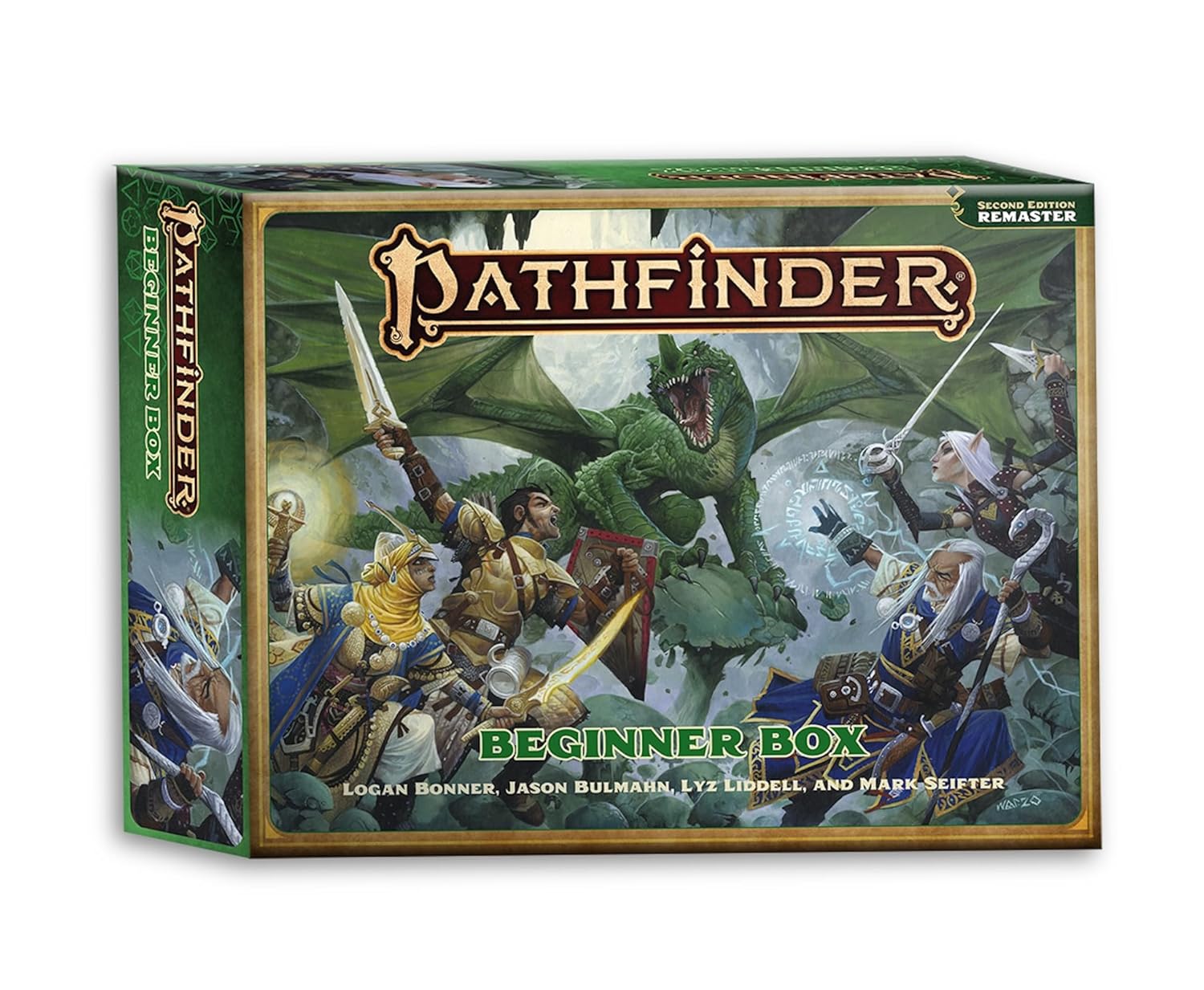
The Pathfinder Beginner Box is a starter set for tabletop roleplaying games (TTRPGs). It’s designed to teach you how to play Pathfinder, a popular fantasy RPG. This review breaks down exactly what’s inside, who it’s for, and whether it’s the right choice for you.
The Pathfinder Beginner Box is a starter set for tabletop roleplaying games (TTRPGs). It’s designed to teach you how to play Pathfinder, a popular fantasy RPG. This review breaks down exactly what’s inside, who it’s for, and whether it’s the right choice for you. No hype — just facts.
At a Glance
| Best for | Absolute beginners learning Pathfinder |
| Rules weight | Medium |
| GM required | Yes |
| Solo play | No |
| Session length | 2–3 hours |
| Players | 3–5 (including GM) |
Who This Is For (Read This First)
This box is for absolute beginners who want a structured way to learn Pathfinder. If you’ve never played a TTRPG before and want clear, step-by-step instructions, this is a strong option. The rulebook is written in plain language, and the included adventure walks the Game Master (GM) through running the game with minimal prep.
It’s also good for groups where no one has experience. The box assumes no prior knowledge, so you don’t need a veteran player to explain things. The pre-made characters mean you can start playing immediately without wrestling with character creation.
That said, it’s specifically for people interested in Pathfinder. If you’re unsure whether you prefer Pathfinder, Dungeons & Dragons, or another system, this box won’t help you decide. It’s all-in on Pathfinder.
Who Should Skip It
Skip this if you already know how to play Pathfinder. The Beginner Box doesn’t include the full rules — it’s a simplified version. If you’ve played Pathfinder before, you’ll outgrow this quickly.
Also skip it if you dislike fantasy. Pathfinder is a high-magic, combat-heavy game with elves, dragons, and wizards. If you’d rather play sci-fi, horror, or modern settings, this isn’t the right starting point.
Finally, avoid it if you want a long-term campaign right out of the box. The included adventure is short (about 2–3 sessions), and you’ll need to buy more books to keep playing afterward. It’s a demo, not a full game.
What’s In the Box
Rulebook — is it complete?
The rulebook is a condensed version of Pathfinder’s core rules. It covers the basics: how to roll dice, how combat works, and how to use skills. It’s written for beginners, with clear examples and no jargon. For instance, it explains “rolling a d20” by saying, “This is the 20-sided die. You’ll use it most often.”
However, it’s not the full game. Many rules are simplified or left out entirely. For example, the full Pathfinder rulebook has over 600 pages of rules, while this one is about 64. You won’t find every spell, class, or monster here — just enough to run the included adventure.
The good news? It’s very beginner-friendly. Each rule is introduced right when you need it, so you’re not overwhelmed. For example, the rules for climbing or swimming aren’t dumped on you at the start — they’re explained during the adventure when those skills come up.
Adventure — how long, how hard?
The adventure, “Little Trouble in Big Absalom,” is designed for beginners. It’s a dungeon crawl (a series of connected combat and puzzle rooms) with a simple story: goblins have stolen something, and the players must get it back. It takes about 4–6 hours total, split into two or three play sessions.
The adventure does a great job teaching the GM. Every room has notes like, “Here’s where you might explain how stealth works,” or “This trap is a good time to show how saving throws work.” It’s almost like a tutorial mode for TTRPGs.
That said, it’s very linear. Players follow a set path with little room for creative problem-solving. For example, one room has a locked door. The adventure assumes the players will pick the lock or break it down — it doesn’t suggest alternatives like bribing a guard or finding a secret passage. This keeps things simple but might feel restrictive for some groups.
Extras included
The box comes with several physical tools to help new players:
- Pre-made character sheets: Four ready-to-play characters (fighter, rogue, cleric, wizard) with all stats filled in. This lets you start playing immediately.
- Cardboard pawns: Stand-up tokens for monsters and players, so you don’t need miniatures. These are full-color and clearly labeled.
- Flip-map: A double-sided grid map for the adventure. One side is the dungeon, the other is a town for follow-up games.
- Dice: A full set of polyhedral dice (d4, d6, d8, etc.). These are decent quality, though not premium.
These extras are useful, but they’re basic. The pawns are cardboard, not plastic miniatures, and the map is paper, not laminated. Still, they’re more than enough to get started.
How Long Does It Last?
The Beginner Box will last 1–3 sessions, depending on how fast your group plays. The adventure is short by design — it’s meant to teach the rules, not be a full campaign. Once you finish, you’ll need to buy more books to keep playing.
That said, the rulebook and map can be reused. You could create your own adventures using the simplified rules, though you’ll quickly run into gaps. For example, the box only includes four character classes (fighter, rogue, cleric, wizard), so if someone wants to play a druid or bard, you’re out of luck.
The box is a great way to test Pathfinder before committing to the full Core Rulebook ($60). If your group enjoys it, you can expand. If not, you’ve only spent $30–$40 instead of $100+ on books you might not use.
What to Buy After This
If you like the Beginner Box, here’s what to get next:
- Pathfinder Core Rulebook: The full rules for Pathfinder. This unlocks all character options, spells, and GM tools. Essential for long-term play.
- Pathfinder Bestiary: A book of monsters to use in your own adventures. The Beginner Box only includes a handful.
- Pathfinder Adventure Paths: Pre-made campaigns like “Abomination Vaults” or “Strength of Thousands.” These provide months of content.
You don’t need all three at once. Start with the Core Rulebook, then add others as needed. Avoid buying expansions (like the Advanced Player’s Guide) until you’re comfortable with the basics.
Alternatives to Consider
If you’re unsure about Pathfinder, here are other beginner-friendly options:
- D&D Starter Set (Dragons of Stormwreck Isle): Simpler rules than Pathfinder, with more focus on storytelling. Better for groups that want less combat math.
- Index Card RPG (ICRPG): A rules-light game that’s easy to learn. Good if you want to focus on fast, creative play instead of detailed rules.
- Mausritter: A charming, simple RPG about mice adventurers. Great for kids or groups that want something whimsical.
Pathfinder’s strength is its depth — if you love tactical combat and character customization, it’s worth learning. But if you want something lighter or less combat-focused, other games might fit better.
Frequently Asked Questions
Q: Can I use this box to transition to full Pathfinder rules?
Yes, the Beginner Box teaches core concepts that carry over directly to the full game. The pre-made characters can even be converted to full Pathfinder sheets.
Q: Is this appropriate for younger players (under 12)?
While not specifically designed for kids, the simplified rules work for ages 10+ with adult guidance. The adventure contains typical fantasy violence (fighting goblins).
Q: How does this compare to the D&D Starter Set?
Pathfinder offers more tactical depth and character options, while D&D is more streamlined. Choose based on whether your group prefers combat strategy (Pathfinder) or narrative focus (D&D).