Pathfinder: What It Is and Who It's For
Pathfinder (Pathfinder) is a tabletop role-playing game (TTRPG) where players create characters and embark on adventures in a fantasy world. It’s known for its detailed rules, deep character customization, and tactical combat.
Pathfinder (Pathfinder) is a tabletop role-playing game (TTRPG) where players create characters and embark on adventures in a fantasy world. It’s known for its detailed rules, deep character customization, and tactical combat. While it’s popular among experienced players, beginners might find it challenging due to its complexity. This guide will help you decide if Pathfinder is right for you.
At a Glance
| Best for | Players who enjoy deep customization and tactical combat |
| Rules weight | Heavy |
| GM required | Yes |
| Solo play | No |
| Session length | 3-5 hours |
| Players | 3-6 (including GM) |
What Playing Pathfinder Actually Feels Like
Playing Pathfinder feels like being part of a collaborative story where your choices matter. You’ll create a character with unique abilities, skills, and personality, then work with your group to solve problems, explore dungeons, and fight monsters. The game balances role-playing (talking, negotiating, making decisions) with tactical combat (moving on a grid, using abilities strategically).
One of the standout features of Pathfinder is its depth. Characters can be customized in countless ways, from choosing ancestries (like elves or dwarves) to selecting classes (like wizards or fighters) and feats (special abilities that define your character). This customization allows players to create truly unique characters, but it also means there’s a lot to learn.
The game also emphasizes teamwork. Combat is highly tactical, and players need to coordinate their actions to succeed. For example, a fighter might distract a monster while a rogue sneaks up for a critical hit. This makes the game feel dynamic and engaging, but it also requires players to understand their abilities and how they fit into the group.
Overall, playing Pathfinder feels rewarding if you enjoy detailed rules, deep character customization, and tactical gameplay. However, it can feel overwhelming if you’re new to TTRPGs or prefer a more relaxed, rules-light experience.
How Heavy Are the Rules?
Pathfinder has a reputation for being rules-heavy, and that’s accurate. The game has detailed rules for almost everything, from combat to exploration to social interactions. While this depth allows for a lot of customization and strategic play, it also means there’s a steep learning curve.
For example, combat involves tracking actions, movement, and abilities in precise detail. Each character gets three actions per turn, and these can be used for attacking, moving, casting spells, or using special abilities. There are also rules for flanking, cover, and conditions like being stunned or poisoned. This level of detail makes combat feel tactical and immersive, but it can also be overwhelming for beginners.
Character creation is another area where the rules can feel heavy. There are hundreds of feats, spells, and abilities to choose from, and each decision affects how your character plays. While this allows for a lot of customization, it also means you’ll need to spend time reading and understanding the options.
That said, Pathfinder’s rules are well-organized and clearly written. The Core Rulebook includes plenty of examples and step-by-step guides to help you through the process. If you’re willing to invest the time to learn the rules, you’ll find a system that’s both deep and rewarding.
Do You Need a Game Master?
Yes, Pathfinder requires a Game Master (GM). The GM is responsible for creating the world, controlling non-player characters (NPCs), and guiding the story. They also interpret the rules, resolve disputes, and ensure everyone has fun. Being a GM can be a lot of work, but it’s also a rewarding role that allows you to shape the game world.
For beginners, finding an experienced GM can make a big difference. A good GM will help you learn the rules, guide you through character creation, and create a story that’s fun and engaging. If you’re new to TTRPGs, consider joining a group with an experienced GM or playing a pre-written adventure to get started.
If you’re interested in becoming a GM, Pathfinder offers plenty of resources to help you. The Core Rulebook includes advice on running the game, and there are many pre-written adventures available. However, being a GM requires a lot of preparation and creativity, so it’s not a role to take on lightly.
What to Buy First
If you’re interested in trying Pathfinder, the first thing you’ll need is the Pathfinder Core Rulebook. This book contains all the rules you’ll need to play, including character creation, combat, and exploration. It’s well-organized and includes plenty of examples, making it a good resource for beginners.
In addition to the Core Rulebook, you’ll need a set of polyhedral dice (d4, d6, d8, d10, d12, d20) and a character sheet. Many players also use miniatures and a grid map to represent combat, but these aren’t strictly necessary. If you’re playing online, you can use virtual tabletop platforms like Roll20 or Foundry VTT.
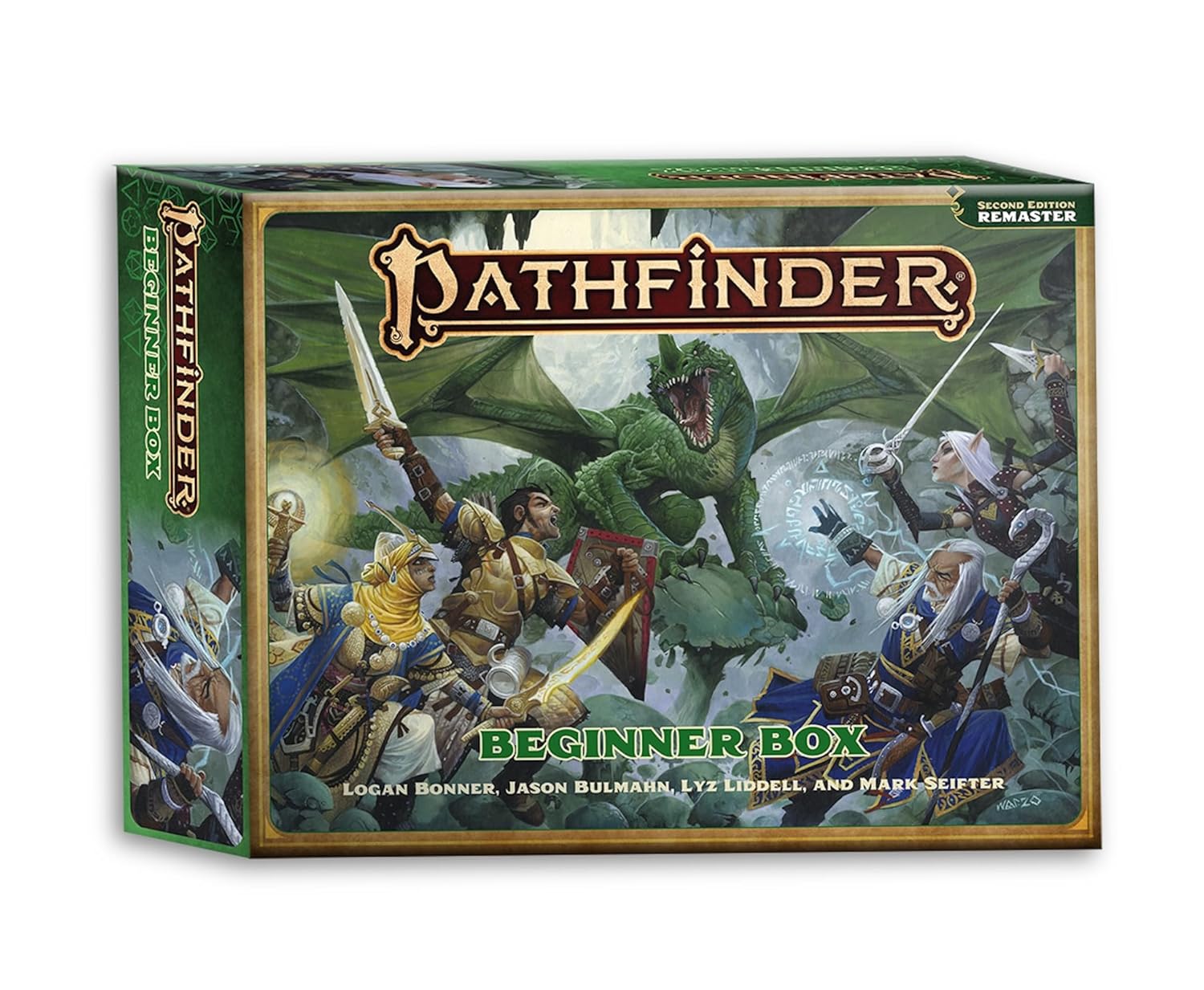
If you’re new to TTRPGs, consider starting with a pre-written adventure. These adventures provide a ready-made story, characters, and encounters, making it easier to get started. Some popular options for beginners include “The Beginner Box” and “The Fall of Plaguestone.”
Is Pathfinder Good for Beginners?
Pathfinder can be a great game for beginners, but it’s not the easiest option. The game’s depth and complexity make it rewarding for players who enjoy detailed rules and tactical gameplay, but it can also be overwhelming for those who are new to TTRPGs.
One of the biggest challenges for beginners is learning the rules. Pathfinder has detailed rules for almost everything, and it can take time to understand how everything works. Character creation is especially complex, with hundreds of feats, spells, and abilities to choose from. While the Core Rulebook includes plenty of examples and step-by-step guides, it’s still a lot to take in.
That said, Pathfinder offers plenty of resources to help beginners. The “Beginner Box” is a great starting point, as it includes simplified rules, pre-generated characters, and a short adventure designed to teach the basics. Playing with an experienced GM can also make a big difference, as they can help you learn the rules and guide you through the game.
Yes if…
- You enjoy detailed rules and tactical gameplay.
- You’re willing to invest time to learn the system.
- You’re playing with an experienced GM or group.
No if…
- You’re looking for a simple, rules-light game.
- You’re new to TTRPGs and want an easier starting point.
- You prefer a more relaxed, improvisational style of play.
Pathfinder vs D&D — When to Choose Pathfinder
Pathfinder and Dungeons & Dragons (D&D) are both popular fantasy TTRPGs, but they have different strengths. D&D is generally easier to learn and more accessible for beginners, while Pathfinder offers more depth and customization.
One of the main differences is the rules. D&D’s rules are simpler and more streamlined, making it easier for beginners to pick up. Pathfinder’s rules are more detailed and complex, which allows for deeper customization and tactical gameplay. For example, Pathfinder’s three-action system in combat is more flexible than D&D’s action economy, but it also requires more strategic thinking.
Character customization is another area where Pathfinder shines. Pathfinder offers hundreds of feats, spells, and abilities, allowing players to create truly unique characters. D&D also offers customization, but it’s more limited in comparison. If you enjoy tinkering with your character and exploring different build options, Pathfinder might be a better fit.
Ultimately, the choice between Pathfinder and D&D comes down to personal preference. If you’re new to TTRPGs and want an easier starting point, D&D is a good choice. If you’re looking for a deeper, more customizable system and are willing to invest the time to learn it, Pathfinder is worth considering.
Best Adventures for Pathfinder
If you’re new to Pathfinder, starting with a pre-written adventure can make it easier to get into the game. Here are some of the best options for beginners:
-
The Beginner Box: This is the best place to start for new players. It includes simplified rules, pre-generated characters, and a short adventure designed to teach the basics. The adventure, “Menace Under Otari,” is a classic dungeon crawl that introduces players to combat, exploration, and role-playing.
-
The Fall of Plaguestone: This adventure is designed for level 1-4 characters and is a good follow-up to the Beginner Box. It’s a murder mystery set in a small town, with plenty of opportunities for role-playing and combat. While it’s more complex than the Beginner Box, it’s still accessible for beginners.
-
The Abomination Vaults: This adventure is