Featured pick for this guide.
As an Amazon Associate we earn from qualifying purchases.
If you’ve ever tried to paint the eyes on a 28mm wizard with a brush that came free in a craft-store kit, you already know why dedicated miniature painting brushes matter so much for TTRPG hobbyists. Painting miniatures for D&D, Warhammer, Pathfinder, or any tabletop game lives or dies on control — the ability to lay down a thin, even line of paint, blend a smooth gradient on a cloak, or drybrush texture onto rocky terrain without slopping paint everywhere. Cheap brushes lose their point after a few uses, shed bristles into your wet paint, and hold paint unevenly. Good miniature brushes, by contrast, are built with fine synthetic or natural-hair tips that snap back to a sharp point wash after wash, letting you paint fine details like faces, chainmail, and freehand symbols with confidence.
What is the best Miniature Painting Brushes for beginners?
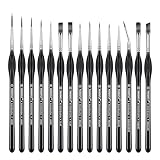
For someone just starting out, the smartest move isn’t buying a single “best” brush — it’s buying a set that covers the handful of techniques every miniature painter actually uses: base-coating, detail work, and drybrushing. The PANDAFLY Detail Paint Brushes Set for Fine Detailing & Art Painting, 15pcs is a genuinely good entry point at under $10 — it gives new painters a range of tip sizes to practice with so they can figure out which brush suits their grip and preferred detail level before spending more. If you know drybrushing (a core skill for highlighting armor edges, fur, and stone bases) is going to be part of your routine from day one, the Nicpro Miniature Paint Brushes Drybrush - 21PCS Model Paint Brush Set is worth the step up in price, since it includes brushes specifically shaped and stiffened for that stippling motion rather than repurposing a detail brush that will fray quickly under drybrushing’s abrasive technique.
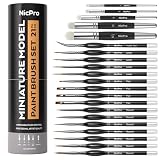
Shaped and stiffened specifically for the stippling motion of drybrushing, instead of fraying a detail brush.
Frequently Asked Questions about Miniature Painting Brushes
Do I need different brushes for different techniques? Yes — a fine-point round for detail, a slightly larger round for base coats, and a flat or specifically-made drybrush for texture work will cover almost everything a tabletop miniature needs. The Golden Maple Detail Paint Brushes Set 10pcs Miniature Brushes for Fine Detailing & Art Painting - Acrylic, Watercolor, Oil, Models is built around exactly this range of sizes, which is why it’s a popular pick for painters who want variety without buying brushes one at a time.
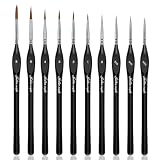
A wide range of sizes in one set, popular with painters who want variety without buying brushes one at a time.
How do I make my brushes last longer? Rinse them immediately after use, never let paint dry in the ferrule, and reshape the tip with your fingers before storing them point-up.
What is the best magnification for painting miniatures?
Most miniature painters find a 5x to 10x magnifier, whether a headband visor or a desk lamp with a built-in lens, hits the sweet spot. Enough magnification helps you see brush placement on eyes, insignia, and tiny trim without so much zoom that your hand-eye coordination feels off. Yes, a magnifier genuinely helps — especially for anyone painting 28mm or smaller scale figures, or anyone whose eyesight makes fine detail work fatiguing.
Is matt or satin varnish better for miniatures?
It depends on the model’s purpose. Matte varnish is the standard choice for most tabletop miniatures because it mutes glare under gaming-table lighting and keeps the paint job looking natural, and it’s also more forgiving of brush marks or uneven thin coats than a glossier finish. Satin is generally reserved for models where you want a slight sheen on skin, armor, or wet-look effects without going full gloss, so most painters keep a bottle of each rather than picking just one for every project.
What can I use as an alternative to Nuln Oil?
Any dedicated “wash” or shading fluid — thinned dark brown or black acrylic ink, or a homemade wash of black paint heavily diluted with water and a drop of flow improver — can approximate Nuln Oil’s effect of pooling in recesses and shading detail. The key is thinning it enough that it flows into crevices rather than sitting on the surface.