
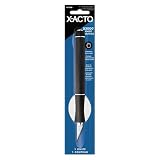
Featured pick for this guide.
As an Amazon Associate we earn from qualifying purchases.
A good hobby knife is one of those tools every miniature painter eventually reaches for, even though it rarely gets the spotlight that brushes and paints do. Before a model ever sees a drop of primer, it usually needs to be freed from its sprue, cleaned of mold lines, and have any flash trimmed away. A sharp, well-balanced knife makes that prep work faster and safer, and it’s just as useful later for scraping dried paint, cleaning out recessed detail, or trimming magnets and basing material. This page rounds up what actually matters when picking one, and where a dedicated frame cutter might serve you better than a traditional blade.
What is the best Miniature Painting Hobby Knife for beginners?
For someone just starting out, the classic choice is a X-ACTO Rubber-Barrel Hobby Knife, X3000 ($12.26). It’s the same style of knife hobbyists have used for decades: a slim metal barrel wrapped in a textured rubber grip, sized to hold like a pen rather than a chunky handle. That grip matters more than it sounds — miniature prep involves a lot of small, controlled cuts, and a slippery handle makes precision harder and increases the chance of a slip. It ships with three #11 blades, which is the pointed, angled blade style most painters use for trimming mold lines and slicing thin plastic sprue connections.
If you’re nervous about handling a traditional blade around detailed resin or plastic minis, The Army Painter Plastic Frame Cutter ($15.47) is worth having alongside it. It’s built specifically for snipping miniatures off their sprues cleanly, which is arguably the single most common cutting task in the hobby, and it reduces the risk of the knife slipping into a finger during that initial extraction step. Many painters keep both: the cutter for pulling parts off the frame, and the X-ACTO-style knife for the finer cleanup work afterward.
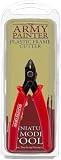
Built specifically for snipping miniatures cleanly off their sprues, reducing the risk of a slip.
Frequently Asked Questions about Miniature Painting Hobby Knife
Do I need a hobby knife if I already have clippers? Clippers are great for the first cut off the sprue, but they don’t replace a knife for scraping mold lines, trimming small nubs of leftover plastic, or cleaning up gates in tight spots between arms, weapons, and detail work. Most painters use both tools in tandem rather than choosing one over the other.
How do I keep a hobby knife safe to use? Always cut away from your fingers, replace blades once they start tearing plastic instead of slicing it, and consider a self-healing mat underneath your workspace. A dull #11 blade is actually more dangerous than a sharp one, since it requires more pressure and is more prone to slipping.
Can a hobby knife double as a sculpting or greenstuff tool? In a pinch, yes — the tip of a #11 blade can clean up mold lines on greenstuff or trim excess putty, though dedicated sculpting tools give more control for that specific task.
What is the best magnification for painting miniatures?
Most detail cleanup with a hobby knife, including spotting stray mold lines or flash on 28-32mm scale miniatures, is comfortably done under 2x to 5x magnification. A magnifier isn’t strictly necessary for cutting sprues, but it does help when you’re deciding whether a seam line needs another light scrape before priming.