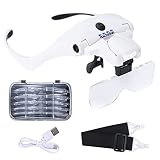
Featured pick for this guide.
As an Amazon Associate we earn from qualifying purchases.
Painting the recess lines on a Space Marine’s pauldron or the eyes on a 28mm fantasy hero is hard enough with young, sharp vision — and for most hobbyists past their twenties, it’s nearly impossible without help. A good miniature painting magnifier turns invisible detail into something you can actually see and control, which is the difference between “good enough from three feet away” and genuinely crisp, competition-worthy freehand. Whether you’re basecoating bulk Necrons or trying to nail the eyes on a hero model, the right magnifier changes what your brush hand is capable of.
What is the best Miniature Painting Magnifier for beginners?
For someone just starting out, the priority isn’t the highest magnification number — it’s something hands-free, comfortable for long sessions, and forgiving if you don’t yet know your ideal working distance. A headband-style magnifier is the easiest entry point because it doesn’t tie up desk space or require you to hunch toward a stand, and it moves with you as you tilt the model. The YOCTOSUN Magnifying Glasses with 4 LED Lights, Headband Magnifier with 5 Detachable Lenses fits this brief well: it comes with five swappable lenses (1X, 1.5X, 2X, 2.5X, 3.5X) so a beginner can start low-power for basecoating and base work, then step up in magnification for eyes, freehand icons, or tiny weapon details. The built-in LED lights are genuinely useful too, since most beginner setups are painting under a single desk lamp that leaves the model half in shadow.
Frequently Asked Questions about Miniature Painting Magnifier
What is the best magnification for painting miniatures?
There’s no single “best” power because it depends on the task. Most painters find 2x to 3.5x comfortable for general highlighting, blending, and layering on 28-32mm scale miniatures — strong enough to reveal texture and transitions without making the model look like a blurry, oversized blob or forcing you to paint at an awkward, too-close distance. Push higher, into the 5x-10x range, only for genuinely fiddly work: eyes, tiny gem highlights, unit insignia, or checking your edge highlighting for consistency. A desk-mounted option like the Coyeth 10X Magnifying Glass with Light and Clamp is well suited to that higher-power detail work, since the clamp keeps the lens rock-steady exactly where you need it, and the five dimmable color/brightness modes let you match the light to the paint’s true color rather than fighting warm, yellow-tinted household bulbs.
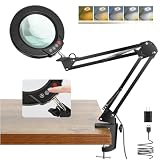
A steady desk-mounted option for higher-power detail work, with dimmable color/brightness modes.
Does a magnifier actually help with miniatures?
Yes — beyond just “seeing better,” magnification reduces eye strain over long painting sessions, helps you catch mistakes (stray brush strokes, missed spots, uneven thinning) before they dry, and lets you push finer detail than your unaided eye can resolve, which is especially valuable once models get to studio or display quality.
How do I choose between headband and desk magnifiers?
Headband models excel for mobility and when you need to frequently reposition the model or work at varying angles, while desk or clamp models provide steadier, higher-magnification views for precision work without wearing anything on your head. Many painters keep both types on hand and switch based on the task.