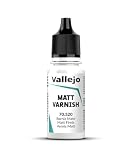
Featured pick for this guide.
As an Amazon Associate we earn from qualifying purchases.
A good coat of varnish is the difference between a paint job that survives years of tabletop combat and one that starts chipping the first time your Ork Boyz get shoved back into foam. Varnish (also called sealant) is a clear topcoat applied over finished paint to protect it from handling, moisture, and UV fading, and to unify the sheen across metallics, washes, and matte basecoats. Below we cover which varnishes work best depending on your goals, plus answers to the questions painters most often search alongside this topic.
Frequently Asked Questions about Miniature Varnish/Sealant
Should you varnish painted miniatures? Yes, almost always. Unvarnished acrylic paint is soft and stays vulnerable to scuffing, sweaty fingers, and the occasional dice-box collision. A varnish layer hardens the surface and locks in details like washes and metallics so they don’t rub off over time. The main exceptions are miniatures kept purely as display pieces in a case, or models mid-project where you plan to keep adding layers. For anything that will actually see a game table, varnishing is close to mandatory. A brush-on option like Vallejo’s Permanent Acrylic Varnish is a low-fuss way to get that protection without needing spray ventilation, and its small 18ml bottle is easy to control for detail work.
Is matt or satin varnish better for miniatures?
Matt is the overwhelming favorite for tabletop miniatures because it mutes shine and keeps the model looking “painted” rather than plasticky, which matters especially on cloth, skin, and stone textures. Satin sits in between and is sometimes chosen for wet-look effects — slick armor, insect carapaces, or vehicle paint jobs — where a touch of gloss reads as realistic without going full high-shine. Gloss itself is usually reserved just for eyes, gems, or blood effects rather than the whole model. For an all-purpose matte finish that also holds up to the “quickshade” dip technique, The Army Painter Anti Shine Matt Varnish is a popular spray choice, while Vallejo’s Polyurethane Matt Varnish is a brush/airbrush-friendly option prized for its durability and hard finish.
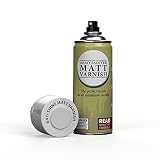
A popular spray choice that holds up well to the "quickshade" dip technique.
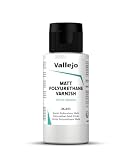
Brush/airbrush-friendly, prized for its durability and hard finish.
What can I use as an alternative to Nuln Oil?
Nuln Oil is Games Workshop’s black-brown contrast wash, but it’s really just one specific formulation of a “pin wash” — a thinned, flowing paint designed to settle into recesses and add shading. Any similarly thinned dark acrylic wash from Vallejo, Army Painter, or Scale75 can substitute, and many painters simply mix their own by heavily diluting a dark brown or black acrylic with water and a drop of flow improver. The key traits to match are a matte dry finish, minimal shine buildup, and enough water content that it pools naturally into panel lines and folds rather than sitting on flat surfaces.
What is the best magnification for painting miniatures?
For most tabletop-scale infantry, a magnification range of roughly 2x–5x is the sweet spot — enough to sharpen fine details like eyes, insignia, and freehand lines without distorting depth perception or making brush control feel unnatural. Higher magnification helps for true fine-detail work (faces, small icons) but can make it harder to see the whole model at once, so many painters keep a lower-power lens for general work and switch to a stronger one only for close-up detailing.
What is the best Miniature Varnish/Sealant for beginners?
New painters generally get the most reliable results from a brush-on matte varnish rather than a spray, simply because it removes the variables of weather, spray distance, and can pressure that cause the dreaded “varnish frosting” effect. A small bottle like Vallejo’s Permanent Acrylic Varnish is easy to apply in thin, even coats straight from the pot, forgiving of minor application mistakes, and cheap enough to experiment with before committing to a spray can for batch-painting whole armies.