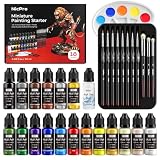
Featured pick for this guide.
As an Amazon Associate we earn from qualifying purchases.
Picking up a brush for the first time — whether you’ve just cracked open a box of Warhammer plastics or a fresh set of D&D minis for your next campaign — is exciting until you realize how much gear “real” miniature painters seem to own. A good starter kit cuts through that overwhelm by bundling the paints, brushes, and palette you actually need into one purchase, so you can spend your first evening painting instead of shopping.
What is the best Miniature Painting Starter Kit for beginners?
For most new painters, the sweet spot is a kit that gives you enough colors to actually finish a miniature — base coat, layer, wash, and highlight — without handing you 60 pots you won’t touch for months. The Nicpro All-In-One Miniature Painting Kit with 18 Colors hits that balance well: it’s built specifically as a first kit, with a compact color range and the basic tools bundled in, at a price that won’t make you flinch if you decide the hobby isn’t for you after all.
If you already know you’re staying — because you’ve got a whole army or a full party of characters lined up — stepping up to the Nicpro All-in-One Kit with 18 Model Paints & Wet Palette adds a wet palette, which keeps acrylics workable for hours instead of drying into a crust on your palette after ten minutes. For painters who want maximum color variety right out of the box, the 36-color Nicpro Kit with Wet Palette gives you enough range to skip a lot of early paint-mixing altogether.
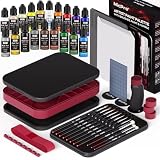
Adds a wet palette that keeps acrylics workable for hours instead of drying into a crust after ten minutes.
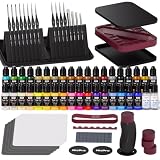
Maximum color variety right out of the box, so you skip a lot of early paint-mixing.
Frequently Asked Questions about Miniature Painting Starter Kit
Is matt or satin varnish better for miniatures?
Most tabletop painters reach for matt varnish because it keeps the miniature’s surface looking natural under normal lighting — no distracting glare on armor, cloth, or skin. Satin has its place for specific effects, like wet-looking stone, leather, or certain creature textures where a slight sheen actually reads as realistic, but as a default “protect the paint job” coat, matt is the safer, more forgiving choice for beginners.
What can I use as an alternative to Nuln Oil?
Nuln Oil is popular because it’s a reliable dark brown-black wash that pools into recesses and adds instant depth, but it’s far from the only option. Any commercial “black wash” or “shade” from a hobby paint line will do a similar job — you’re essentially looking for a thinned, flow-improved dark paint. In a pinch, painters also make their own by heavily diluting a dark acrylic with water and a drop of flow improver or dish soap, though pre-made washes give more consistent, predictable results for anyone still learning how much wash to apply.
What is the best magnification for painting miniatures?
For standard 28-32mm tabletop miniatures, a magnifier in the 2x-5x range is usually enough to see facial details, eyes, and fine trim without distorting your sense of scale. Higher magnification helps with genuinely tiny details — eyes on a small-scale figure, freehand lines — but too much power up close can actually make brushwork harder because your field of view shrinks. A magnifier does help most beginners, especially anyone over 35 or painting under imperfect lighting, since it reduces eye strain over a long painting session as much as it improves precision.