Featured pick for this guide.
As an Amazon Associate we earn from qualifying purchases.
A weathering wash is a thinned, pigment-heavy liquid that flows into the recesses of a miniature — armor joints, cloth folds, gun barrels, gear teeth — to add instant shadow, grime, or rust without any freehand skill required. Unlike a straight shade wash used mainly for recess shading, a dedicated weathering wash is formulated to sit unevenly on the surface, pool at edges, and dry with a slightly textured, dirty look that mimics rust streaks, dust, oil stains, or battlefield grit. For TTRPG painters, this is the single fastest way to make a unit of plastic or resin miniatures look “used” and tabletop-ready instead of flat and toy-like.
What is the best Miniature Weathering Wash for beginners?
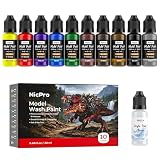
If you’re just starting out, you want a wash that’s pre-thinned, forgiving of mistakes, and available in enough colors to cover shading and effects without buying a dozen separate bottles. The Nicpro 10 Colors Acrylic Model Wash Paint Set, 20ml Ready to Use Washes is a strong beginner pick because it arrives ready to use straight from the bottle — no mixing ratios to guess at — and the ten-color spread means you get browns and blacks for general recess shading plus enough variety to start experimenting with rust and grime effects on the same model. Because it’s acrylic-based, mistakes clean up with water while the paint is still wet, which matters a lot when you’re still learning how much wash to load on your brush.
Frequently Asked Questions about Miniature Weathering Wash
What can I use as an alternative to Nuln Oil?
Nuln Oil is Games Workshop’s black-brown recess shade, and plenty of hobbyists ask what else does the same job. Any thinned black or dark brown acrylic wash will function similarly — the key traits to look for are a matte dry finish and a runny consistency that pools into detail lines rather than sitting on flat surfaces. The Vallejo Game Color Wash 8-bottle set is a solid substitute, since it’s built specifically for shading and recess work with a rich pigment load and a matte finish that behaves much like Nuln Oil once it’s dry. For weathering specifically rather than general shading, dedicated effects washes like Vallejo Wash FX Dark Rust go a step further, adding a rust-colored, gritty finish rather than the flat gray-black of a typical shade.
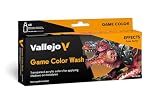
Built specifically for shading and recess work, with a matte finish similar to Nuln Oil once dry.
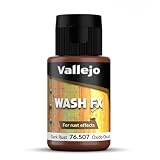
A dedicated effects wash — rust-colored and gritty rather than a flat gray-black shade.
Is matt or satin varnish better for miniatures?
Matte varnish is the go-to choice for most tabletop miniatures because it kills glare under gaming table lighting and keeps the paint job looking natural rather than plastic-shiny. Satin is sometimes preferred on models where you want a little more depth or a subtle sheen on skin and metal, but it’s a minority choice for RPG and wargaming miniatures compared to matte. If you’ve just applied a weathering wash, sealing over it with a matte coat also helps lock the pigment into the recesses so it doesn’t rub off with handling during game sessions.
What is the best magnification for painting miniatures?
For applying fine washes into tiny recesses — rivets, chainmail links, weapon trim — most painters find a magnification range of roughly 2x to 5x strikes the right balance. Too little magnification and you can’t see where the wash is actually flowing; too much and you lose the wider view needed to judge how the effect reads on the whole model. A magnifier is genuinely useful here, since weathering effects live or die on precise placement, and squinting at a 28mm miniature under normal room light makes it easy to overload a wash in the wrong spot.